India's current account deficit narrowed to $1.3 billion or 0.2 per cent of GDP in the January-March quarter of FY23, mainly due to moderation in the trade deficit and a robust increase in services exports, RBI data showed on Tuesday. However, for the 2022-23 fiscal, the current account balance recorded a deficit of 2 per cent of GDP compared to 1.2 per cent in 2021-22. "India's current account deficit (CAD) decreased to $1.3 billion (0.2 per cent of GDP) in Q4:2022-23 from $16.8 billion (2.0 per cent of GDP) in Q3:2022-231, and $13.4 billion (1.6 per cent of GDP) a year ago [Q4:2021-22]," as per the RBI's 'Developments in India's Balance of Payments during the Fourth Quarter (January-March) of 2022-23'.

The deadlock over foreign direct investment in the retail sector continues as government officials on Tuesday informed parties opposing FDI that they will discuss their demands with the Prime Minister Manmohan Singh.
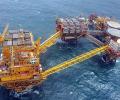
ONGC's overseas arm applied for a sanctions waiver to access $500 million dividend from two Venezuelan projects.

The first five days of the fair from November 14-18 are restricted to business visitors.

The Delhi high court on Friday sought the stand of news portal NewsClick and its editor-in-chief on a plea by the Enforcement Directorate (ED) seeking vacation of an earlier order granting them protection from coercive action in a money laundering case.
Mauritius is back in the news, and as usual not for the right reasons.
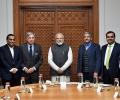
Further stimulus measures are expected in the upcoming Budget where the focus is likely to be on reforms, including some structural measures such as reducing red tape and boosting foreign direct investment. The meeting with industrialists is in the series of discussions that Modi has had during the last couple of weeks to seek suggestions to revive growth.

Justice Mukta Gupta said the interim protection granted to Prabir Purkayastha will be in force till the next date of hearing, September 2.

FIPB panel to meet today, discuss telecom investments.
The government on Thursday made it mandatory for all major foreign armament companies winnings contracts worth more than Rs 300 crores (Rs 3 billion) to necessarily invest thirty per cent of the amount in the country as direct offsets.
Company analysts and tax experts say neither the foreign direct investment nor the portfolio investment by large institutions will be affected.

The capital infusion is expected to bolster its presence in the country by funding its key businesses to take on Indian rival Ola.

RBI feels allowing foreign companies into this business may affect financial stability.
Govt's decision to allow FDI will attract capital, boost confidence and soothe the nerves, say experts.
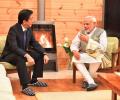
During Abe's tenure, Japan had announced support for a number of major projects. These included the bullet train project between Mumbai and Ahmedabad, besides allocations for a freight corridor between Mumbai and New Delhi.

Fuelled by the $57.8-billion merger of HDFC twins (HDFC Ltd and HDFC Bank), M&A (merger and acquisition) transactions in India touched a record high of $124.2 billion in the first half of 2022-23. Bankers said with several transactions, including the government's stake sale in IDBI Bank and Hindustan Zinc in the pipeline, the ongoing financial year will end up as the best year for M&A activity in the country. Apart from the HDFC transaction, the $6.5-billion acquisition of Holcim stake by the Adani family and L&T's $3.2-billion acquisition of Mindtree added to the record transactions in the first half of FY23.
Revision in the 2005 policy for foreign direct investment in telecom sector is likely to be announced on or before January 2, Lok Sabha was informed on Wednesday.
While protests are mounting against the government policy allowing foreign direct investment in multi-brand retail, the chain, founded by Bal Gangadhar Tilak and supported by the likes of Ratanji Jamshedji Tata, is in the midst of change. Besides foreign money, it is also keen on establishing a global presence.

After the case was registered, the CBI carried out searches at four places in the national capital and Bengaluru.

The government on Saturday made its prior approval mandatory for foreign investments from countries that share land border with India to curb 'opportunistic takeovers' of domestic firms following the COVID-19 pandemic, a move which will restrict Foreign Direct Investment from China.

The bench of Chief Justice N V Ramana and Justice Pradeep Nandrajog issued notices to the Centre, Foreign Investment Promotion Board and Commerce and Civil Aviation ministries and sought their responses by October 30.
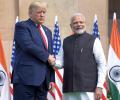
Prime Minister Narendra Modi will pay a two-day working visit to the US from February 12 during which he will meet President Donald Trump, the external affairs ministry announced. The visit will give further impetus and direction to India-US bilateral relationship. Prior to his US visit, Modi will be in France from February 10-12 to co-chair the AI Action Summit with French President Emmanuel Macron. He will also visit Cadarache, the site of the International Thermonuclear Experimental Reactor of which India is a partner. During his visit to France from February 10-12, Modi and Macron will also address the India-France CEOs forum. The prime minister and Macron will travel to Marseille where they will inaugurate the Consulate General of India. The leaders will also visit the war cemetery and pay tribute to the sacrifices made by Indian soldiers in World War 1. Modi and Macron will visit Cadarache, the site of the International Thermonuclear Experimental Reactor (ITER). There has been a very close rapport between Trump and Modi, dating back to the US leader's first term. There is a clear convergence of interests between the two countries in several areas, including trade, investment, technology, defense cooperation, counterterrorism, Indo-Pacific security, and people-to-people relations.
.jpg)
The Indian Consulate in Guangzhou has organised a face to face interaction with Chinese investors to make a case for them to step up investments in India, a press release from the Consulate said.

China supplied more than $20 billion worth of arms to Pakistan. These include 20 J-10CE and JF-17 Block III fighter aircraft, Wing Loong drones, frigates, submarines, Hongqi HQ-9P surface-to-air missiles, 240 PL-15E air-to-air missiles, LY-80 air defence systems, ZDK early warning aircraft and other weapons.
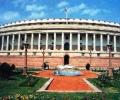
The government has decided to consult allies like the Trinamool Congress and the Dravida Munnetra Kazhagam before any resolution on extending the ambit of FDI to aviation by allowing foreign carriers to buy stakes in Indian ones.

The FIPB rejected two proposals -- Nigeria's Mokeme Chiwetal Izuchukwu and Lanarth Developers Pvt Ltd.

The Bilateral Aviation Safety Agreement, the civil nuclear technology transfer, telecom infrastructure security and business jet landing rights are among other "policy accomplishments in 2011" listed on the US chamber's website.

In a consultation paper issued on Tuesday, the department of industrial policy and promotion sought comments on whether FDI should be restricted to LLPs operating in sectors without any investment caps, conditionalities or entry route restrictions.

The much-delayed Insurance Bill seeks to raise the foreign investment cap in the sector from 26 per cent to 49 per cent, with a rider that the management control rests in the hands of Indian promoter.

At present, a project with investment of more than Rs 600 crore in sectors routed through the Foreign Investment Promotion Board has to be referred to the Cabinet Committee on Economic Affairs.
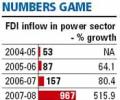
The sector attracted foreign investments to the tune of $1,252 million during the year, a 12.8 per cent decline compared to $1,437 million registered in the previous year, according to latest data released by the Department of Industrial Policy and Promotion (see table).
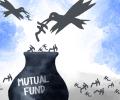
Capital markets regulator Sebi has permitted mutual funds to again invest in foreign stocks within the aggregate mandated limit of $7 billion for the industry. This came in the wake of a major correction in global markets that brought down the valuation of international stocks. In January, Sebi had asked mutual fund houses to stop taking fresh subscriptions in schemes investing in overseas stocks. The directive to stop subscription was mainly on account of the mutual fund industry crossing the mandated limit of $7 billion for overseas investments.

This follows an investigation into alleged violations of foreign exchange rules involving foreign direct investment of Rs 85 crore and Rs 140 crore by JP Morgan India and Amrapali Group firms.

There has been a decline in foreign direct inflow from China in the last three years, with FDI coming down to USD 163.77 million in 2019-20, Minister of State for Finance Anurag Singh Thakur informed the Lok Sabha on Monday. Giving details of the total foreign direct investment (FDI) inflow from Chinese companies in India, he said, it was USD 350.22 million in 2017-18, while it declined to USD 229 million in the following year.

As part of it, the govt may permit 26% FDI in insurance broking through the automatic route.

Foreign direct investment (FDI) in India's aviation sector is long overdue; the Cabinet should back Mr Singh's decision -- which was taken following a meeting with Finance Minister Pranab Mukherjee, Petroleum Minister Jaipal Reddy and Commerce Minister Anand Sharma.

After declining for three consecutive quarters, the value of FPI investment in Indian equities rose 8 per cent quarter-on-quarter to $566 billion in the July-September period, according to a Morningstar report on Wednesday. A fast-changing global macroeconomic landscape, sentiments and opportunities that the Indian equity markets have to offer impacted the direction of flows by Foreign Portfolio Investors (FPIs). Through the quarter, the value of the FPI holdings in domestic equities surged by 8 per cent to $566 billion from $523 billion recorded in the previous quarter.

According to sources, there is a proposal to allow 100 per cent Foreign Direct Investment in single brand retail sector "through automatic route" with certain conditions.
